Sewage Treatment Plants and Water Treatment Plants are mandatory for large residential complexes in India. Understanding operational requirements, CPCB standards, and common failure modes can save your RWA significant costs.
Under the Environment Protection Act and CPCB (Central Pollution Control Board) guidelines, residential complexes above a certain size are mandated to install and operate Sewage Treatment Plants (STPs). Non-compliance attracts significant penalties.
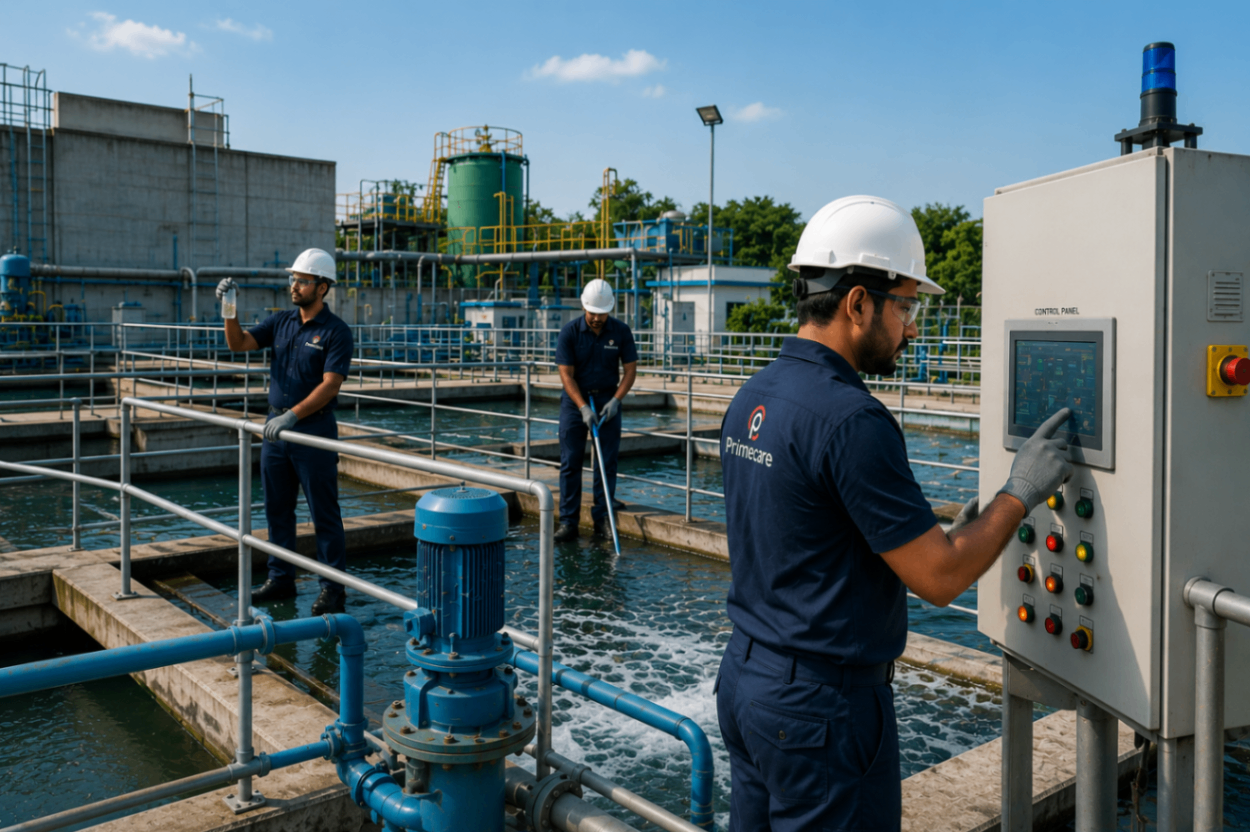
STP operation requires daily monitoring of influent and effluent quality parameters: BOD (Biochemical Oxygen Demand), COD (Chemical Oxygen Demand), TSS (Total Suspended Solids), and pH. Treated water must meet CPCB discharge standards before being released or reused.
Common STP failure modes include sludge bulking (caused by filamentous bacteria), aeration system failures, and chemical dosing errors. Each failure mode has specific remediation steps — and early detection through daily monitoring prevents costly breakdowns.
PrimeCare IFM operates STPs and WTPs for 40+ residential complexes across Chennai and Bengaluru. Our operators hold TNPCB/KSPCB operator certificates and submit monthly compliance reports on behalf of our clients.